
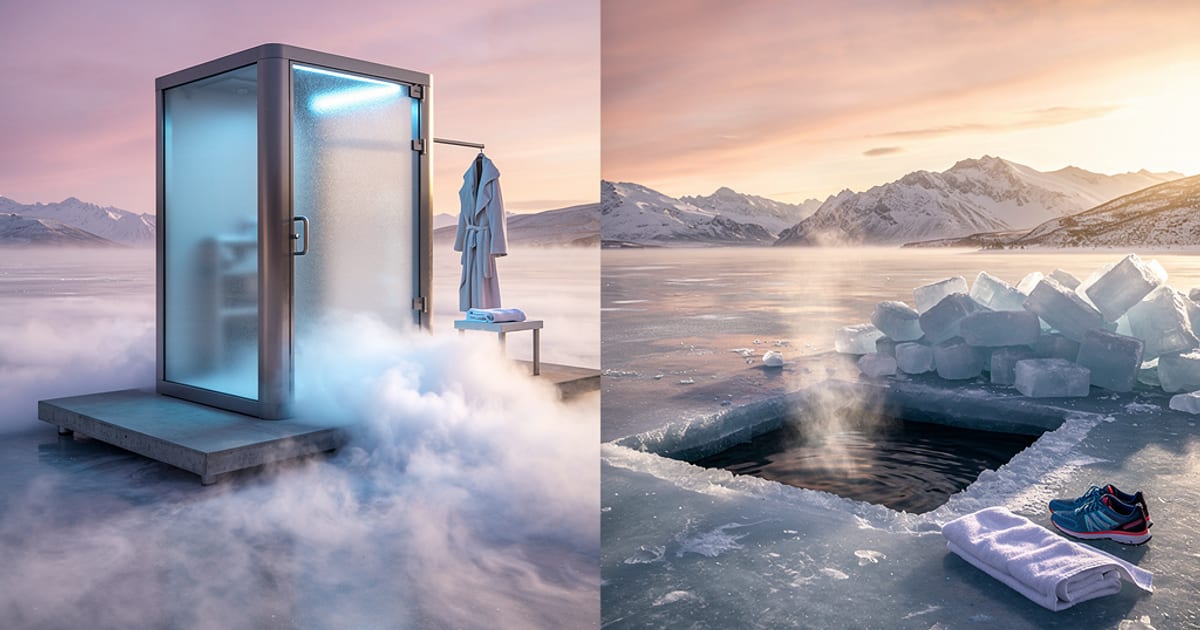
Cryotherapy generally delivers faster sessions than ice baths, requiring just 2-4 minutes of whole-body cold-air exposure versus the 10-20 minutes of submersion a typical ice bath needs. Both methods can reduce post-training soreness and the perception of muscle fatigue, but cryotherapy's short, systemic approach makes it the more time-efficient option for lifters trying to recover consistently between sessions.
The real difference comes down to how each method delivers cold, how long it takes, and how easily you can fit it into a regular training week.
How Cryotherapy Accelerates Recovery
Whole-body cryotherapy exposes you to extremely cold, dry air (often around -200°F to -250°F) for just 2-4 minutes. This brief but intense cold triggers a rapid, full-body response that can blunt inflammation and dampen the sensation of soreness across multiple muscle groups at once.
Because the medium is dry air rather than water, there's no hydrostatic discomfort and no wet clothes to deal with afterward. The cold drives a temporary increase in circulation and an endorphin response that many people describe as immediate relief.
Practically, cryotherapy fits easily into a training schedule. You walk in, complete a session, and carry on with your day—no extended soak and no cleanup. That convenience is a big part of why it tends to be easier to do consistently.
Ice Bath Benefits and Limitations
Ice baths are a well-established recovery tool, typically using cold water at 50-59°F for 10-20 minutes. The trade-off is the longer duration, which can be uncomfortable and harder to repeat day after day.
One advantage ice baths have is the water itself: the hydrostatic pressure of immersion supports circulation and lymphatic drainage, and you can target specific limbs or muscle groups depending on how you set up. For a hard lower-body session, sitting submerged to the waist is a genuinely effective option.
The downsides are time and tolerance. The extended exposure and the discomfort factor are the most common reasons lifters fall off a cold-therapy habit, which matters because recovery only helps if you actually do it.
Which Method Fits Your Training?
For serious lifters tracking their training progression in an app like Kenso, consistency in recovery protocols matters as much as consistency in programming. Cryotherapy's short sessions make it easier to keep as a regular practice, while ice baths reward you when you have more time and want targeted, lower-body recovery after a heavy session.
Ice baths are also the more accessible option for home use—once you've made the initial setup investment, the ongoing cost is low. Cryotherapy, by contrast, usually means paying per session at a facility.
The honest answer to "which is faster" depends on what you mean. Cryotherapy delivers quicker individual sessions with comparable perceived benefits, while ice baths may suit those who prefer water immersion and have the time for it. Worth noting: the research on whether cold exposure speeds physical recovery is mixed, and some evidence suggests cold immediately after lifting may slightly blunt muscle-growth adaptations. Many lifters reserve cold therapy for in-season or high-frequency periods rather than dedicated hypertrophy blocks.
Consider your schedule, your access to facilities, and your personal tolerance when choosing an approach. Both methods support the kind of intentional, repeatable recovery that disciplined training depends on.
Ready to see how cold therapy fits your recovery? Kenso reads sleep, heart rate, and other metrics from Apple Health to produce a recovery-readiness score, so you can watch how your training and recovery choices show up in your data over time.
What's the main difference between cryotherapy and ice baths?
Cryotherapy uses extremely cold dry air for 2-4 minutes, while ice baths require 10-20 minutes of cold water immersion. Cryotherapy is faster per session; ice baths add the circulatory benefit of water immersion.
How often should you use cold therapy for recovery?
A common pattern is a few times per week after intense training, but individual response varies with training volume and goals. If muscle growth is your priority, consider timing cold exposure away from your hardest lifting sessions.
Is cryotherapy more expensive than ice baths?
Usually, yes. Cryotherapy sessions typically run $25-60 each at a facility, while an ice bath has a one-time setup cost and low ongoing expense for home use.
Can you do both cryotherapy and ice baths?
Yes. Many people use them for different purposes—cryotherapy for quick, frequent recovery and ice baths for targeted, lower-body recovery after particularly intense sessions.
Which cold therapy method works better for DOMS?
Both can reduce the perception of delayed onset muscle soreness (DOMS). Cryotherapy's whole-body approach may feel like faster relief, though individual response and timing matter more than the method itself.
This article contains affiliate links. We may earn a small commission at no extra cost to you.