
TL;DR
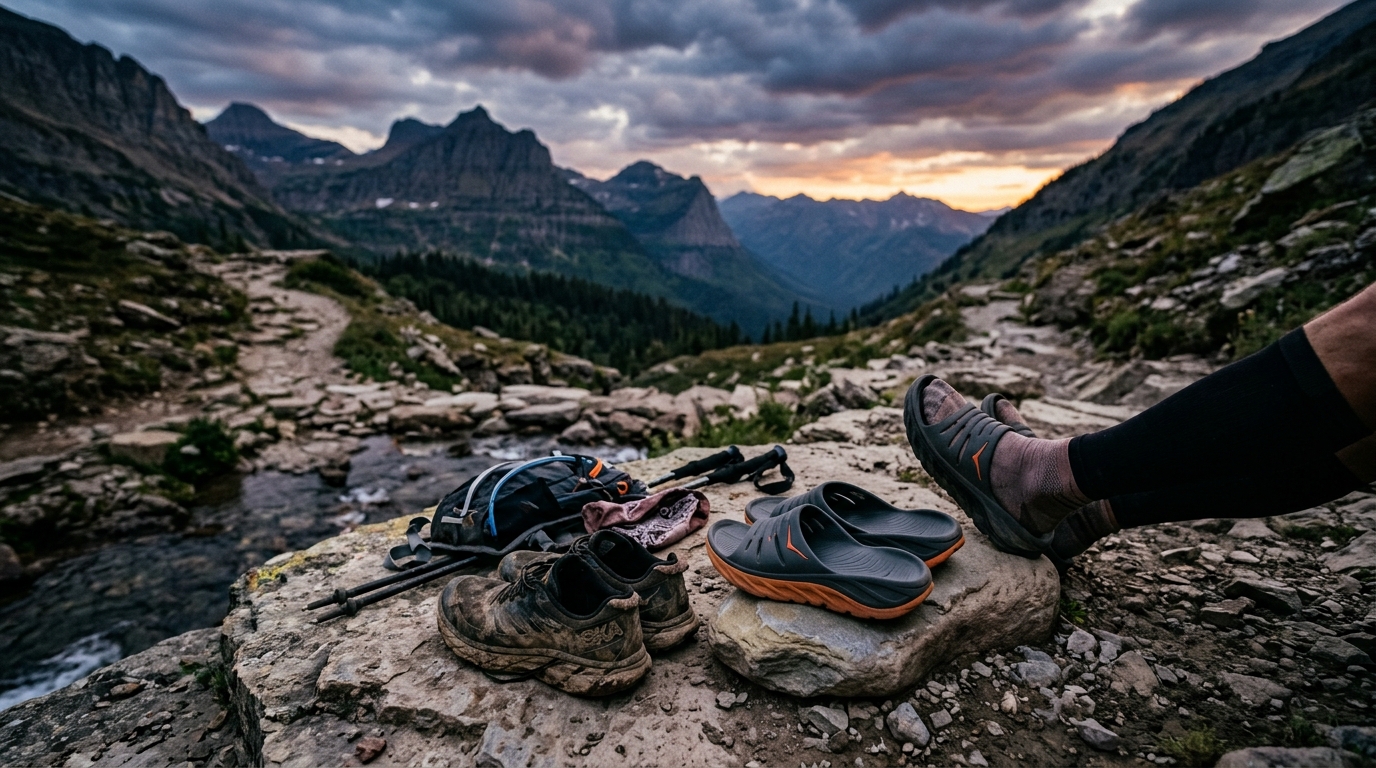
The OOFOS OOahh Slide ($90) is the best recovery sandal for lifters — OOFOS says its OOfoam absorbs significantly more impact than standard EVA, and the slide weighs just 7.3 oz. For the best value, the Hoka Ora Recovery Slide 3 ($60) offers thick, rockered cushioning at the lowest price. And for a closed-toe option, the Kane Revive (~$80) is built for active recovery — light walking and errands after the gym. All three beat walking barefoot or in flat slides after heavy training.
Best Recovery Sandals Ranked
1. OOFOS OOahh Slide
The gold standard in recovery footwear. OOFOS markets its proprietary OOfoam as absorbing more impact than traditional EVA, and in practice the soft, springy footbed takes the edge off every step after a hard session.
- Tech: Proprietary OOfoam, contoured arch support, rocker sole
- Weight: 7.3 oz
- Price: ~$90
- Why lifters love it: The arch support counteracts hours spent in flat lifting shoes. Machine washable.
- Buy on Amazon
2. Hoka Ora Recovery Slide 3
Hoka's running-shoe cushioning in slide form, and the best value of the bunch. Carries the APMA Seal of Acceptance for foot health.
- Tech: Dual-density sugarcane EVA, 33mm stack height, rockered forefoot
- Weight: ~1 lb
- Price: ~$60
- Why lifters love it: The rocker geometry encourages a natural foot roll. Best value pick at the lowest price here.
- Buy on Amazon
3. Kane Revive Active Recovery Shoe
A closed-toe recovery shoe for lifters who want to stay on their feet post-workout — walk the dog, run errands, move around the house.
- Tech: Sugarcane-based EVA foam, ventilating cutouts, closed-toe design
- Weight: 8.9 oz
- Price: ~$80
- Why lifters love it: The closed-toe build gives more support than a slide for light movement after training.
- Buy on Amazon
4. Adidas Adilette Comfort Slides
Budget-friendly option from a trusted brand. Cloudfoam cushioning is softer than standard slides.
- Tech: Cloudfoam midsole, contoured footbed
- Weight: ~9 oz
- Price: ~$35-45
- Why lifters love it: Cheap, available everywhere, decent cushioning for the price.
- Buy on Amazon
5. Under Armour Ignite Pro Slide
Simple recovery slide with thick foam cushioning. A solid gym-bag option.
- Tech: Molded footbed, thick EVA foam
- Price: ~$40-50
- Why lifters love it: Wide fit accommodates swollen post-workout feet.
Comparison Table
| Sandal | Type | Cushioning | Weight | Price |
|---|---|---|---|---|
| OOFOS OOahh | Slide | OOfoam (high impact absorption) | 7.3 oz | ~$90 |
| Hoka Ora 3 | Slide | Dual-density rocker | ~1 lb | ~$60 |
| Kane Revive | Closed-toe | Sugarcane EVA | 8.9 oz | ~$80 |
| Adidas Comfort | Slide | Cloudfoam | ~9 oz | ~$35-45 |
| UA Ignite Pro | Slide | Thick EVA | ~10 oz | ~$40-50 |
Why Recovery Sandals Matter for Lifters
Your feet take a beating during training — the impact of heavy deadlifts, the lateral forces of squats, and hours locked into rigid lifting shoes. Switching to recovery footwear afterward gives your feet the same attention you give your muscles.
Key benefits:
- Arch support counteracts the flat positioning of lifting shoes
- Shock absorption softens stress on feet, knees, and lower back
- Heel cradles promote natural alignment after hours of loaded positions
- Wide toe boxes let feet spread and decompress
How to Choose
- Best overall: OOFOS OOahh — soft, springy OOfoam and the lightest option here
- Best value: Hoka Ora 3 at ~$60 — the most cushioning per dollar
- Active recovery: Kane Revive — closed-toe for walking and errands after the gym
- Gym-bag essential: Adidas Comfort — cheap enough to keep in your bag permanently
FAQ
Are recovery sandals actually worth it for lifters?
Yes. Lifting shoes are built for stability, not comfort. Switching to recovery footwear post-workout reduces cumulative foot stress and can improve how your feet feel going into your next session. Think of it like foam rolling — a small recovery habit with real payoff over time.
OOFOS vs Hoka — which is better for recovery?
OOFOS leans into soft, springy impact absorption and is the lighter of the two. Hoka offers more structure and a rockered sole that encourages a natural gait. OOFOS wins on pure cushioned recovery; Hoka wins on versatility and value at ~$60 versus ~$90.
Should I wear recovery sandals all day?
They're designed for post-workout wear, not all-day use. A few hours after training is the sweet spot. For daily wear, you want shoes with more structured support.
Do recovery sandals help with plantar fasciitis?
Many lifters with plantar fasciitis report relief from OOFOS and Hoka recovery slides thanks to the arch support and impact absorption. They're not a medical treatment, but they do reduce foot stress compared to flat sandals.
Recovery doesn't stop at sleep and nutrition — your feet need attention too. Track your training load and recovery signals with Kenso to know when your body is asking for an easier day.
This article contains affiliate links. We may earn a small commission at no extra cost to you.